Moszna Castle: the complete guide
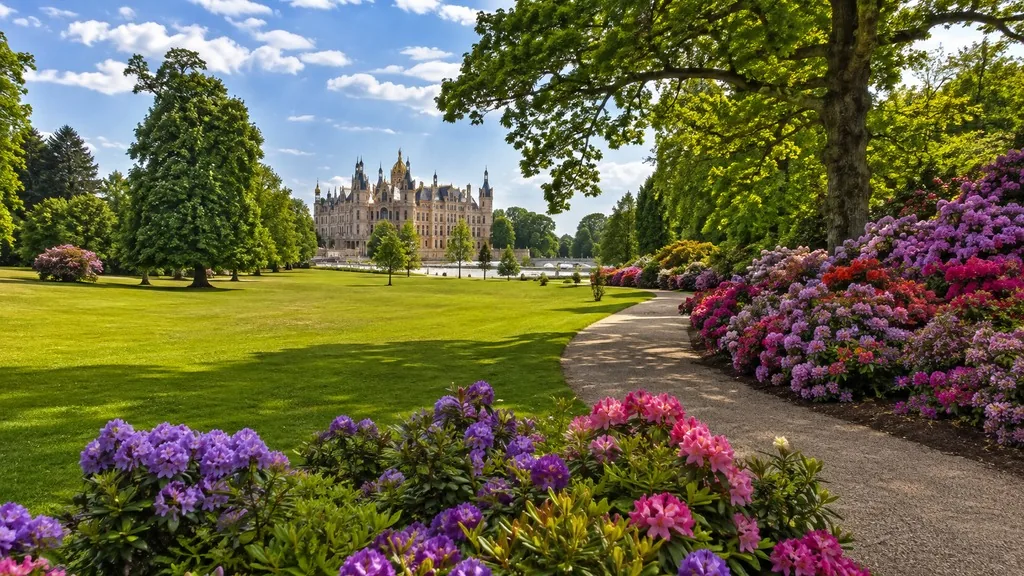
Moszna Castle is a 99-turret palace in the village of Moszna in Opole Voivodeship, southwestern Poland, built around a Baroque core that burned in 1896 and was rebuilt with a neo-Gothic east wing in 1900 and a neo-Renaissance west wing between 1912 and 1914. Visiting it means two separate things: a chamber route the castle times at 45 to 60 minutes, and the largest park in the Opole region outside. This page explains both, and what it takes to get there.
Moszna Castle photographs better than almost anything else in Poland and explains itself worse. The silhouette that fills the search results — a long, pale front bristling with turrets — is the result of a fire, an industrial fortune and two building campaigns that ran twelve years apart. Knowing that much in advance changes what you look at, and it also changes which ticket you buy.
Why the building looks like that
At the centre is a Baroque palace. On 2 April 1896 fire destroyed it, and Franz Hubert von Tiele-Winckler had it rebuilt the same year. The wings came afterwards: a neo-Gothic east wing, completed in 1900 with an orangery adjoining it, and a neo-Renaissance west wing built between 1912 and 1914. Three architectural moods, one roofline. That is the whole explanation for a building that reference works file under eclectic.
The numbers are the other half of the reputation. Ninety-nine turrets, counted as exactly ninety-nine, and 365 rooms. The castle gives the interior floor area as about 8,000 m² and the cubic capacity as about 65,000 m³. The tidy correspondence with the seasons and the days of the year is a story the castle and its visitors tell rather than a documented design brief, and we would rather say so.
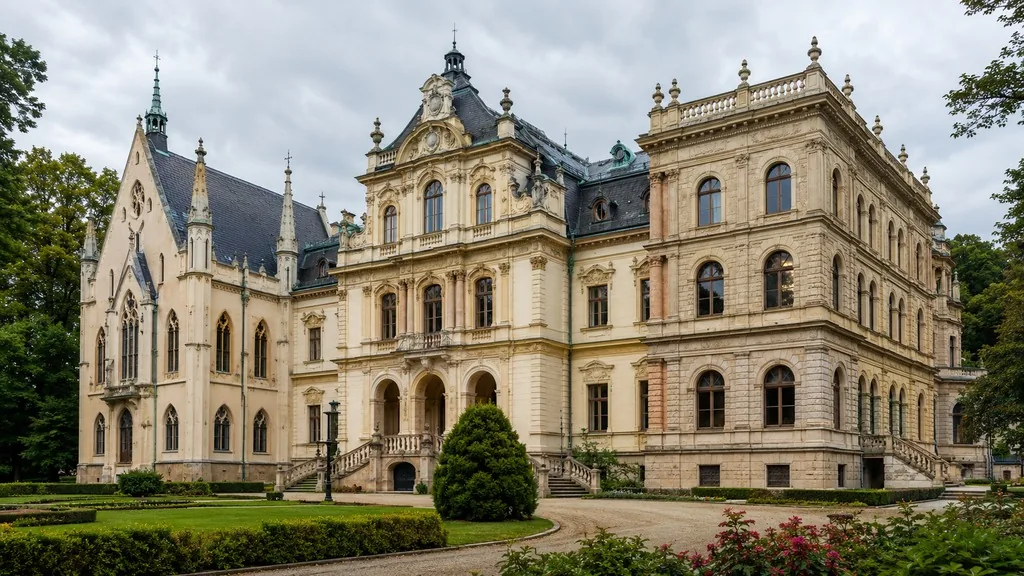
The Tiele-Winckler century, and 1945
The Tiele-Winckler family, German industrialists, held Moszna from 1866 until 1945, and fled in the spring of that year. What followed was hard on the interiors: Soviet occupation did damage, and the estate then passed through institutional hands. It became a convalescent home in 1972 and started showing artists’ exhibitions in 1998. In the park, past the fountain along the lime avenue, a marble pedestal survives — what is left of a monument to Hubert von Tiele-Winckler. It is the one piece of the estate that still reads as a family seat rather than a venue.
What you can go inside, and what you cannot
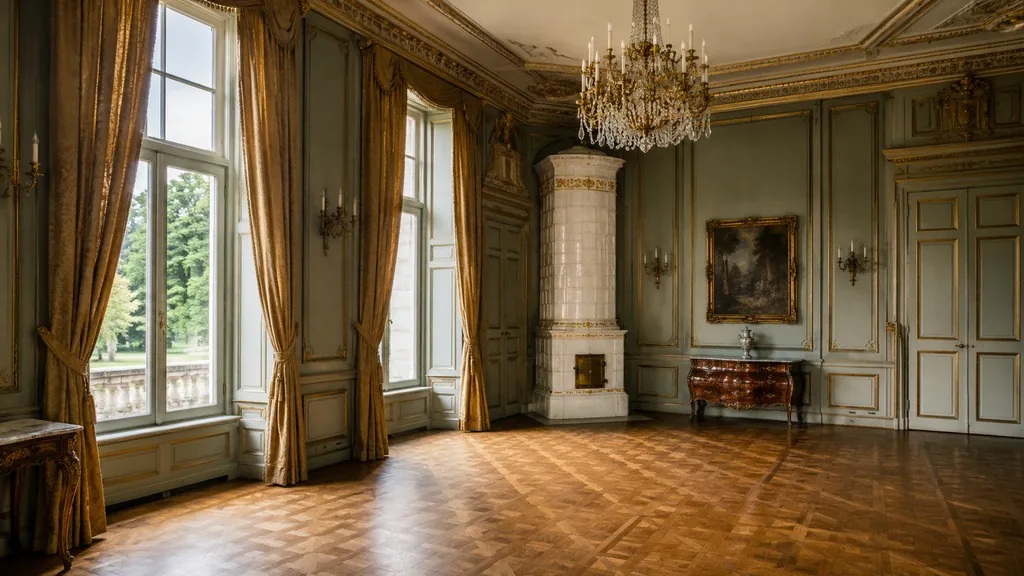
The interior open to visitors is smaller than the frontage suggests. The chamber route covers a guest waiting room, the former mirror room, a vestibule, the library, the gallery, the Count’s room, the Golden Suite and the chapel, and the castle times that at 45 to 60 minutes. You can walk it with a castle guide or unguided; the unguided version is supported by audio systems in each room and by information boards, and a free SmartGuide app is available to download. A separate guided tour called Daily Life of the Castle needs a reservation.
Two things catch people out. The towers are their own ticket, sold either with the park or with the park and the unguided chambers, and an entrance ticket to the palace and park grounds is required in addition to the chamber-tour ticket. The other is timing: the castle recommends visiting the chambers between 9:00 and 15:30, and lists chamber tours in a morning block on weekdays with an evening block added from Friday to Sunday in season. Arrive at four in the afternoon on a Tuesday and you have bought a walk in a park.
Moszna is also a working hotel with 49 rooms and 127 beds, a restaurant and an events venue, and the chapel doubles as a concert hall. Weddings, conferences and festivals move the daily programme, so the castle states plainly that visiting hours and tour availability may change. Anyone using a wheelchair should read the castle’s own wording carefully: it describes access as very difficult because of the number of stairs, with a lift that reaches only selected hotel rooms and an accessible toilet on the first floor. Check the current position on the official site before you commit to a date.
The park is the other half of the visit
This is the largest park in the Opole region, and for a great many visitors it is the better half. A lime avenue runs through it, with mighty oaks, conifers and evergreens around it, ponds with an islet the castle calls the island of love, a fountain, and an orangery whose exotic planting includes an 80-year-old ficus. Oak and horse-chestnut avenues, symmetrical canals along the lime corridor and a Chinese-styled bridge to the pond islet are all recorded in reference sources, which also document garden works from 1868.
Azaleas and rhododendrons are the signature planting, and the castle says Moszna holds the largest concentration of them. Late spring is the peak, and the castle runs an Azalea Blossom Festival; the exact weeks move with the weather, so check the festival dates rather than trusting a month. Spring temperatures typically run around 7 to 20 °C and autumn around 6 to 18 °C. Other things happen here too — Castello Musical Theatre performances, jazz and other outdoor events through the season.
Getting there is the real planning problem
Moszna is a village, and it is genuinely remote. Wrocław is about 111 to 125 km away, roughly 1 h 25 min to 1.5 h by car. Katowice is about 114 km, roughly 1.5 h. Kraków is about 185 km, roughly 2.5 h. Opole, the nearest city, sits about 30 km north. There is no direct public connection from any of them. The fastest option without a car is a train from Wrocław Główny to Gogolin and a taxi from the station, at roughly 1 h 20 min door to door; Gorazdze plus a taxi is slower, and a bus to Opole plus a taxi is slower again.
If you drive, there are about 50 spaces at the reception entrance, free for overnight guests and subject to availability, and buses cannot park there. If you do not drive, the door-to-door private tours from Wrocław, Katowice and Kraków exist precisely because the timetable does not solve this. Whichever way you come, aim at the morning. The park will still be there at five; the chambers will not.
Ready to go?
If you are driving, buy the castle ticket that matches the visit you want — the cost page lays out the castle’s published bands and the opening-hours page covers the three separate schedules. If you are coming from a city without a car, the door-to-door options are on the day-trips page, and current dates and prices are live below.
Frequently asked questions
What is Moszna Castle best known for?
Its silhouette. The castle has 99 turrets and 365 rooms, and the eclectic mix of a Baroque core with neo-Gothic and neo-Renaissance wings gives it a skyline no other Polish castle has. The turret count has its own page, including what the often-repeated symbolism does and does not rest on.
Can you go inside Moszna Castle?
Yes, on a chamber ticket — guided or unguided — which the castle times at 45 to 60 minutes and routes through eight spaces ending at the chapel. The towers are a separate ticket. What you actually see is listed here.
Is Moszna Castle easy to reach without a car?
Not especially. There is no direct public connection from Wrocław or Kraków; the usual workaround is a train to Gogolin and a taxi, or a door-to-door tour. The transport page compares the options city by city.